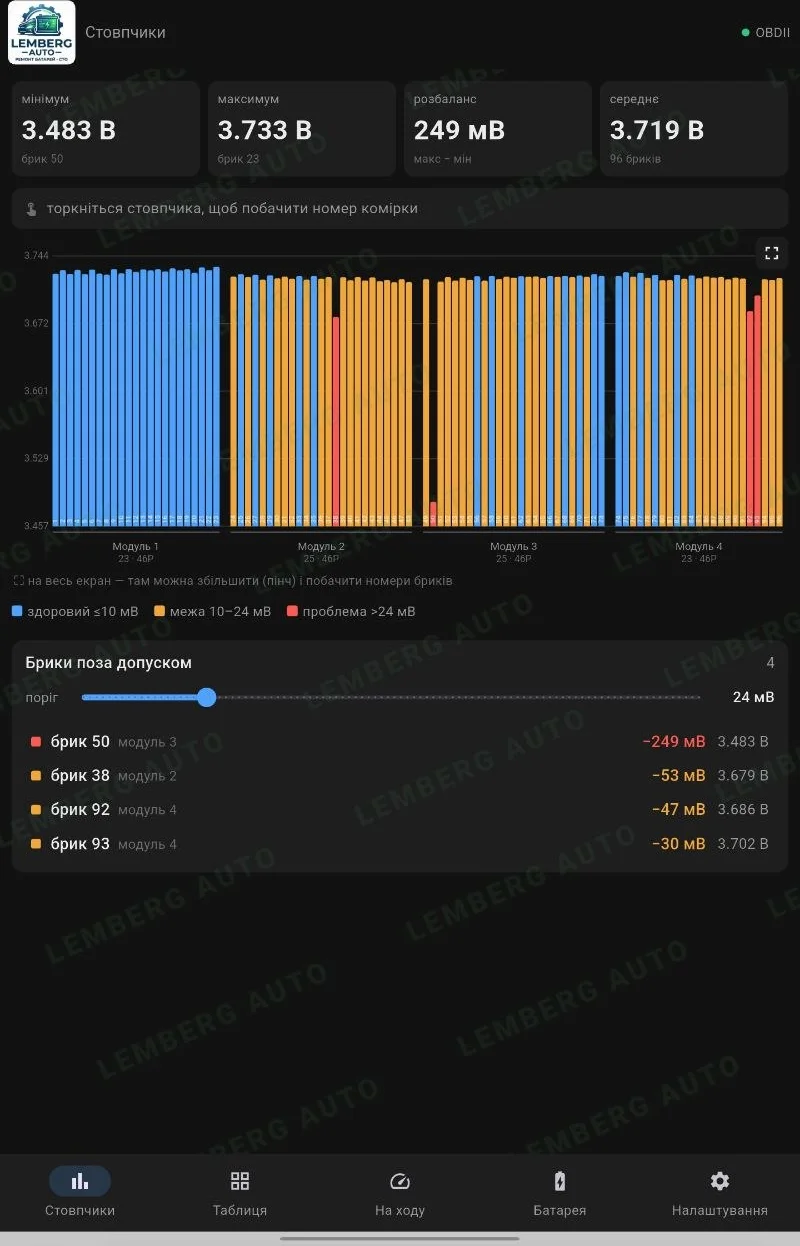
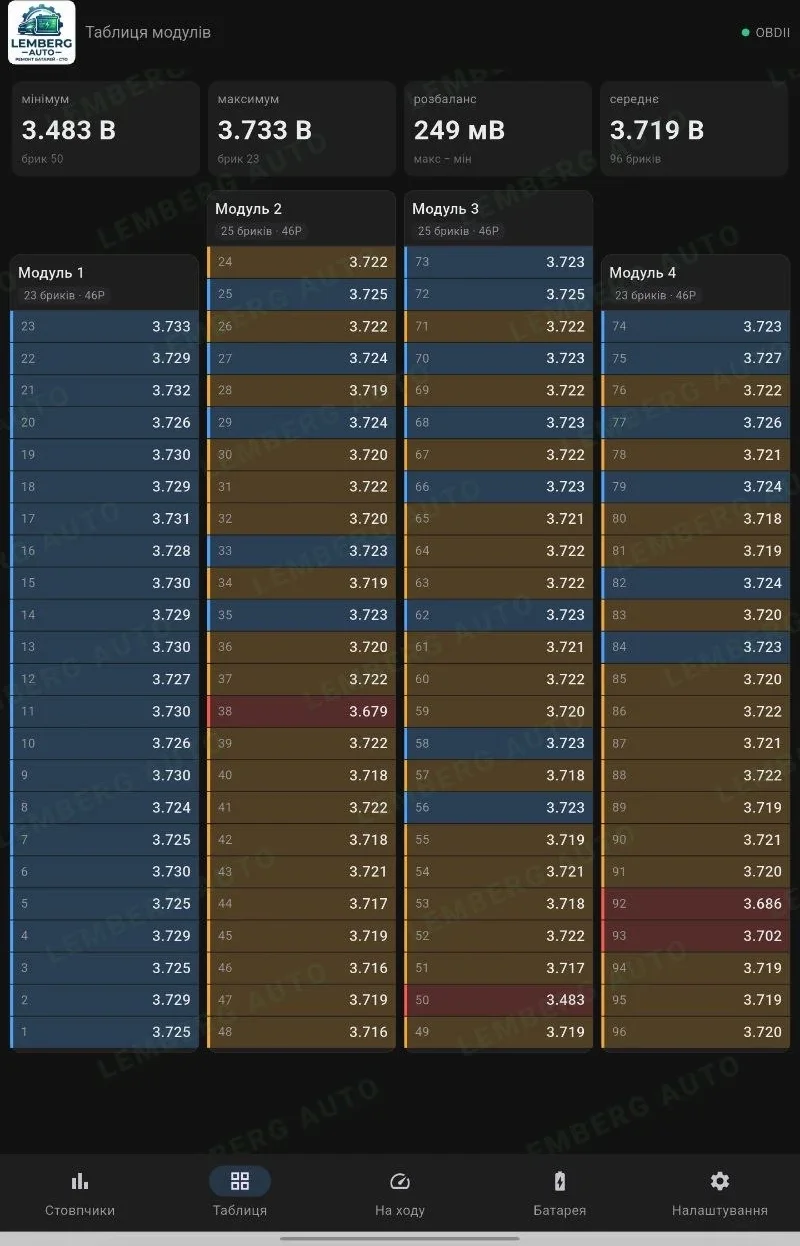
The battery management system (BMS) monitors the voltage and capacity of every cell group. When one group falls behind the rest, the BMS raises an alert and limits charging or power. These are the alerts people most often come to us with.
BMS_a066
BMS_a066 — state-of-charge imbalance
An early sign of imbalance: one or more cell groups hold a lower state of charge than the rest of the battery. The car is still drivable, but without repair the imbalance usually grows.
May show: “Maximum charge level and range may be reduced”
BMS_a064
BMS_a064 — imbalance has grown, charge limited
The next stage after BMS_a066: the gap between cell groups has widened and the BMS limits the maximum charge (often to about 50%).
Result: less range, the car won't charge fully
BMS_a079BMS_a074
BMS_a079, BMS_a074 — Tesla won't charge above 50%
The BMS has detected a problem inside the high-voltage battery and won't let it charge above 50%. The most common cause is imbalance or a weak cell group.
On screen: “Unable to charge – maximum charge level reached”
BMS_a067BMS_a068
BMS_a067, BMS_a068 — capacity imbalance in a module
The capacity of cell groups in one module has drifted apart: one group holds less energy than the others. The BMS limits power and charging; with BMS_a068 it requires service.
On screen: “High voltage battery performance limited”
BMS_u018BMS_u029
BMS_u018, BMS_u029 — Model S / X: maximum charge reduced
Similar alerts on 2012–2020 Model S and Model X: imbalance between cell groups or a weak group. The BMS lowers the maximum charge level.
On screen: “Maximum battery charge level reduced”
A code is not a diagnosis
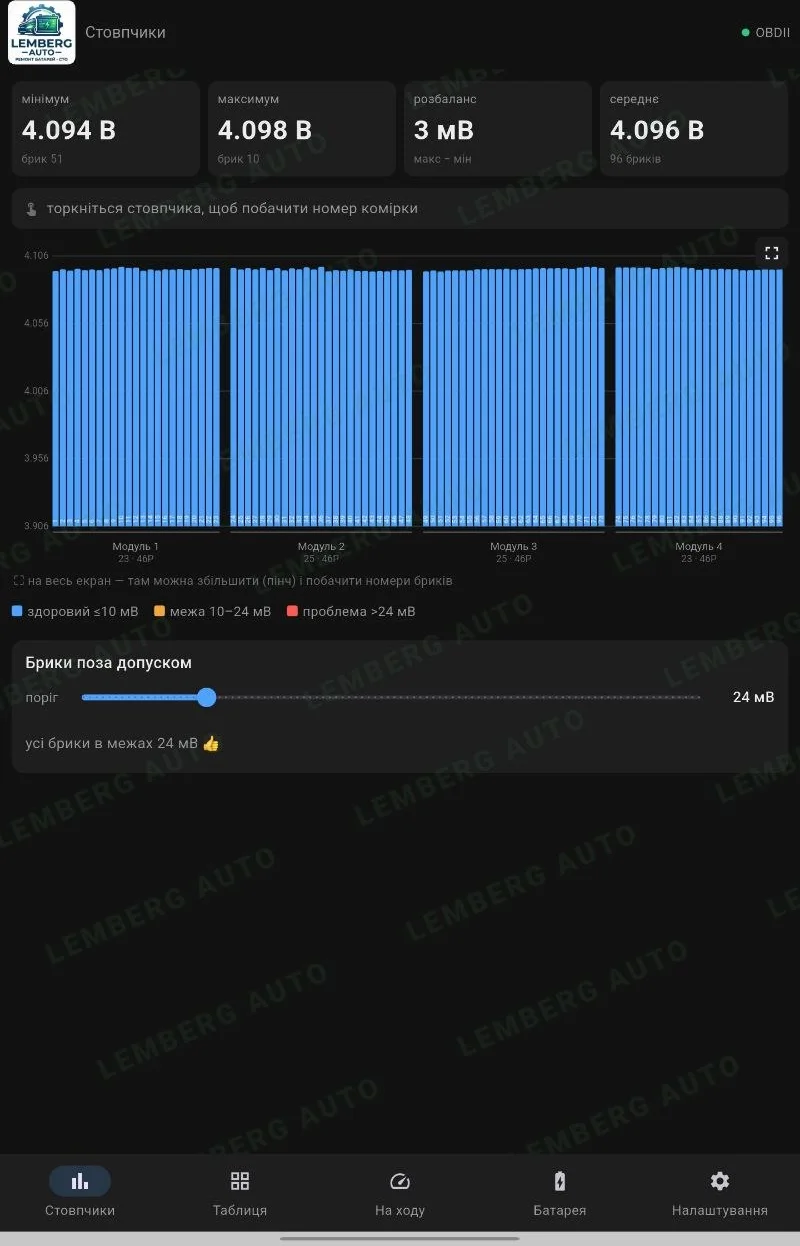
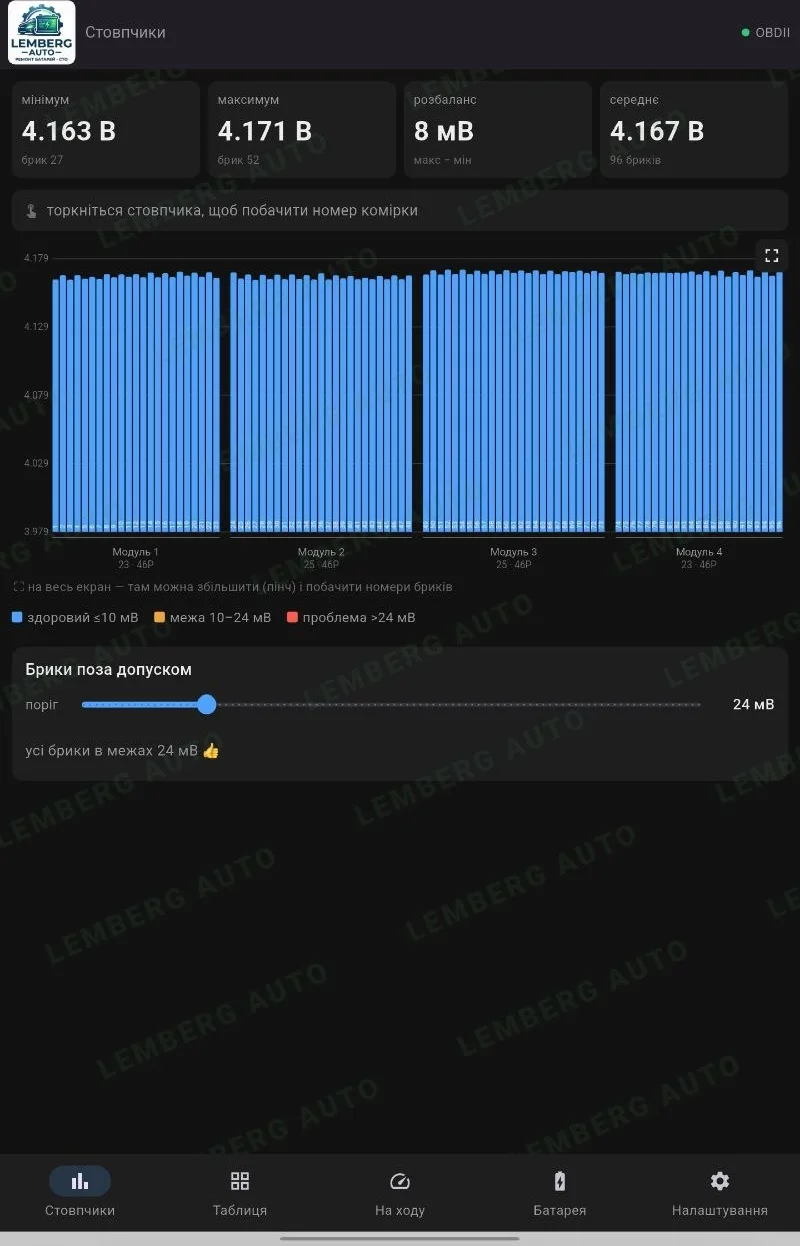
Codes differ by model and year, and the same alert can have different causes. So we don't just clear the alert — we check the voltage of all 96 cell groups and the battery's behaviour under load, and fix the actual cause.
BMS_a027, BMS_a035 are isolation alerts, not imbalance